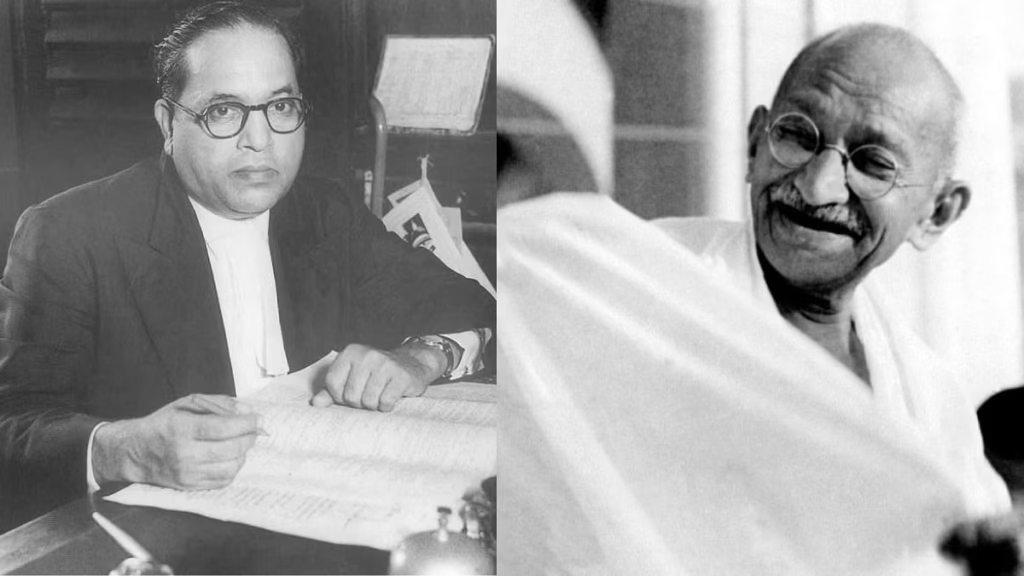
Social justice in India is a foundational principle enshrined in the Constitution, aiming to create a society where all individuals—regardless of caste, class, gender, religion, or economic status—are treated with dignity and fairness. It seeks to eliminate social and economic disparities and ensure equal access to opportunities, rights, and resources.

Constitutional Framework
The Indian Constitution lays the groundwork for social justice through:
- Preamble: Promises justice—social, economic, and political—to all citizens.
- Fundamental Rights: Guarantee equality before the law and prohibit discrimination.
- Directive Principles of State Policy: Guide the state to promote welfare, reduce inequality, and protect marginalized groups.
Key Legislations
India has enacted several laws to uphold social justice:
- Protection of Civil Rights Act (1955): Abolishes untouchability and promotes equality.
- Scheduled Castes and Scheduled Tribes (Prevention of Atrocities) Act (1989): Protects vulnerable communities from discrimination and violence2.
Affirmative Action and Reservations
India has one of the most comprehensive affirmative action systems globally:
- Reservation Policies: Provide quotas in education, employment, and politics for Scheduled Castes (SC), Scheduled Tribes (ST), and Other Backward Classes (OBC).
- Historical Milestones: The Gandhi–Ambedkar Pact (Poona Pact, 1932), Mandal Commission (1980), and various state-level initiatives have shaped the reservation discourse.
Social Movements and Advocacy
Grassroots movements have played a vital role in advancing social justice:
- Dalit Rights Movement
- Women’s Rights Campaigns
Ensure effective implementation of laws and policies
Promote inclusive education and economic empowerment
Encourage civic participation and awareness & Address intersectional inequalities through targeted interventions